After a hurricane tears through your neighborhood, the roof is almost always the first casualty. And yet, for many Florida homeowners, the insurance settlement that follows barely covers the real cost of repairs. Understanding exactly how a hurricane roof damage insurance claim inspection works is the single most important thing you can do to protect your payout before an adjuster ever steps on your property.
This guide breaks down the adjuster’s evaluation process from the inside out, so you know what they are looking for, where claims commonly fall apart, and how to make sure nothing gets missed.
What Does an Insurance Adjuster Actually Look for on a Damaged Roof?
When an adjuster arrives after a hurricane, their job is not simply to document damage. It is to determine which damage is covered under your specific policy and which is not. Those two goals are not always the same thing.
Wind-lifted shingles vs. pre-existing wear and tear
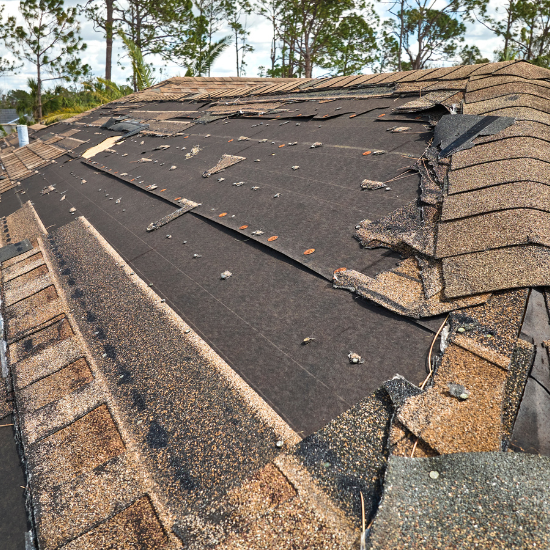
This is the first and most consequential distinction an adjuster makes. Hurricane-caused wind damage typically presents as shingles that have been lifted, creased, or blown off in a directional pattern consistent with the storm’s wind path. What they are looking for: exposed underlayment, missing or cracked tabs, and shingles that have lost adhesion along the edges.
The complication is that adjusters are also trained to identify shingles that were already curling, brittle, or losing granules before the storm. If your roof was 15 years old when the hurricane hit, expect significant scrutiny. Insurers frequently attribute a portion of the damage to age and normal deterioration rather than the storm event itself, which directly reduces your settlement.
Punctures, bruising, and granule loss from debris impact
Hurricane winds carry debris, and that debris leaves marks. Adjusters look for impact bruising on asphalt shingles, which often appears as soft spots or dark discoloration. Granule loss concentrated in irregular patterns (rather than the uniform thinning of an aging roof) is a strong indicator of storm-related impact damage.
This type of damage is important to document independently because it is easy to overlook during a visual scan from ground level. An adjuster conducting a brief inspection may note only the most obvious surface damage while missing subtler impact evidence that accumulates into significant water intrusion over time.
Flashing, ridge caps, and soffit damage
Beyond the field of the roof, adjusters assess the components most vulnerable to hurricane-force winds: ridge caps, which sit at the highest exposure point; step and counter flashing around chimneys, skylights, and vents; and soffit and fascia along the roof’s edges. These areas fail first and are also the most commonly under-documented in an initial claim scope.
Stat worth knowing: According to the Insurance Information Institute, wind damage and hail together account for nearly 40% of all homeowners insurance claims in the United States, making accurate roof assessments one of the highest-stakes parts of any post-hurricane claim.
The “Concurrent Causation” Problem and Why It Hurts Your Payout
How insurers use prior damage to reduce settlements
One of the most frustrating tactics homeowners encounter is the concurrent causation argument. This is when an insurer argues that because some pre-existing damage (a worn shingle, an older flashing seal) contributed to the overall loss, they are entitled to reduce the payout accordingly. In Florida, where older homes are common and roofs face relentless sun and rain long before a storm arrives, this argument comes up frequently.
Florida courts have generally sided with policyholders on this issue, but that does not prevent adjusters from applying it during the initial evaluation. If you do not push back with documentation, the reduced settlement often stands.
What your policy language says about pre-existing conditions
Review your declarations page and the policy’s “Conditions” section closely. Most standard homeowners policies in Florida cover sudden and accidental damage, which is exactly what a hurricane creates. However, policies also contain exclusions for damage that was “in progress” or that resulted from “continuous or repeated seepage.” Understanding which clause applies to your specific situation is where a lot of settlements are won or lost. For a full breakdown of what your policy should be covering, see our Florida hurricane damage claims service.
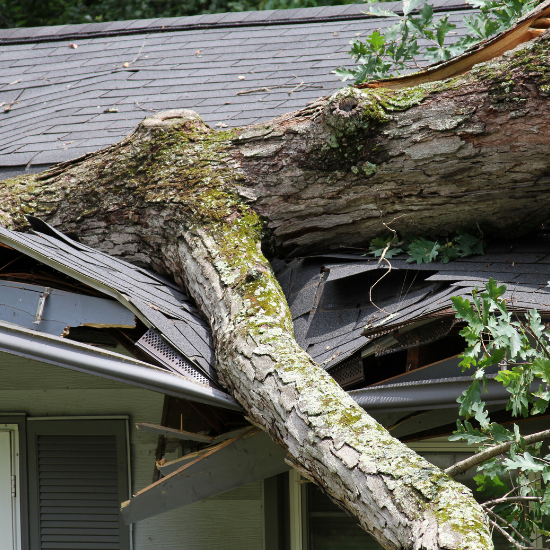
How to Document Roof Damage Before the Adjuster Arrives
Your documentation is your evidence. The more thorough it is, the harder it becomes for an adjuster to minimize the scope of damage.
Photos, video, and timestamps
Photograph every visible area of damage from multiple angles, and capture wide shots that establish context (the full roof plane, the surrounding debris, the direction of wind impact). Video walkarounds are especially effective because they show continuity of damage across a surface. Make sure your device’s timestamp is active so the documentation is tied to the storm event.
Do not wait. Florida’s humidity accelerates secondary damage like mold growth within 24 to 48 hours of water intrusion. Documenting immediately also establishes a clear timeline that separates pre-storm conditions from hurricane-related loss.
Contractor estimates and independent inspection reports
Hiring a licensed roofing contractor to provide a written inspection report before the insurance adjuster visits gives you an independent baseline. If the adjuster’s scope of loss is significantly lower than your contractor’s estimate, you have a concrete, documented basis for disputing it.
Common Ways Hurricane Roof Claims Get Underpaid
“Cosmetic damage” exclusions
Many Florida homeowners are surprised to learn that their policy contains a cosmetic damage exclusion. This clause allows insurers to deny coverage for damage that affects the appearance of a roof but does not, in their assessment, compromise its structural function. Impact marks, dented metal components, and scuffed ridge caps may fall under this exclusion depending on how it is written. Read your policy carefully before assuming visible damage is automatically covered.
Depreciation disputes and ACV vs. RCV settlements
Your policy may pay out on an Actual Cash Value (ACV) basis or a Replacement Cost Value (RCV) basis. ACV settlements deduct for depreciation, meaning a 12-year-old roof will receive a fraction of the replacement cost. RCV policies pay the full cost to replace with comparable materials, with the depreciation “holdback” released once repairs are completed.
Depreciation schedules applied by insurers are often aggressive. Disputing the depreciation calculation is one of the most common and effective ways to increase a hurricane roof settlement.
Missed damage in the initial scope of loss
An adjuster completing a full roof inspection in under an hour is not uncommon, especially after a major storm event when adjusters are handling dozens of claims simultaneously. Damage to the underlayment, decking, interior ceiling systems from water intrusion, and the attic are frequently missed in the initial scope.
A supplemental claim can be filed to address items missed in the original settlement, but the Florida statute of limitations for property insurance claims means you have a defined window to act before that option closes.
What to Do if Your Hurricane Roof Claim Is Denied or Underpaid
If the settlement offer does not reflect the actual damage, you have options.
A licensed public adjuster works on your behalf rather than the insurer’s, conducting an independent inspection, preparing a detailed scope of loss, and negotiating directly with the insurance company. Public adjusters handle the entire process and are paid only if your settlement increases, making it a low-risk option for homeowners facing an underpaid claim.
You can also invoke the appraisal clause in your policy, which brings in neutral umpires to resolve disputes over the value of a loss when you and your insurer cannot agree.
If you believe your claim was handled in bad faith, you have additional legal protections under Florida law, including the right to file a complaint with the Department of Financial Services.
For help evaluating your situation, contact the team at American Premier Claims for a free consultation.
Conclusion
A hurricane roof damage insurance claim inspection is not a passive process. Insurers are evaluating your roof through the lens of what they can reasonably exclude or depreciate, and homeowners who go in without documentation or an understanding of the process regularly receive far less than their damage warrants. Knowing what adjusters look for, preparing your own evidence, and recognizing the common tactics used to reduce payouts puts you in a significantly stronger position.
The roof over your family’s head is worth fighting for. If the settlement you received does not reflect the real cost of your hurricane damage, there is still time to do something about it. Our team handles all types of hurricane property damage claims in Florida and is paid only if your settlement increases, making it a low-risk option for homeowners facing an underpaid claim.
Key Takeaways
- Insurance adjusters are trained to distinguish hurricane wind damage from pre-existing wear and tear. A newer, well-maintained roof is easier to defend.
- Document everything before the adjuster arrives: photos with timestamps, video, and an independent contractor report.
- The concurrent causation argument is commonly used to reduce payouts. Push back with documented evidence of the storm event’s specific impact.
- ACV vs. RCV settlements can mean a difference of tens of thousands of dollars. Know which type your policy carries.
- Cosmetic damage exclusions, aggressive depreciation schedules, and missed damage in the initial scope are the three most common causes of underpaid hurricane roof claims.
- A public adjuster works on contingency and can significantly increase your final settlement with no upfront cost.
- Florida’s statute of limitations limits how long you have to file or supplement a claim. Act promptly.